
The Board of Directors Will Become Software
The board of directors won't disappear. It will become software. In a year, running a company without an operating system will look as archaic as keeping the books by hand under a desk lamp.
Want to see which decisions in your company can already move into a system, and which to keep on yourself? That's the first step — a 90-second AI diagnostic of the management gap. It shows exactly where you became the bottleneck and which circuit closes it.
Start with the diagnostic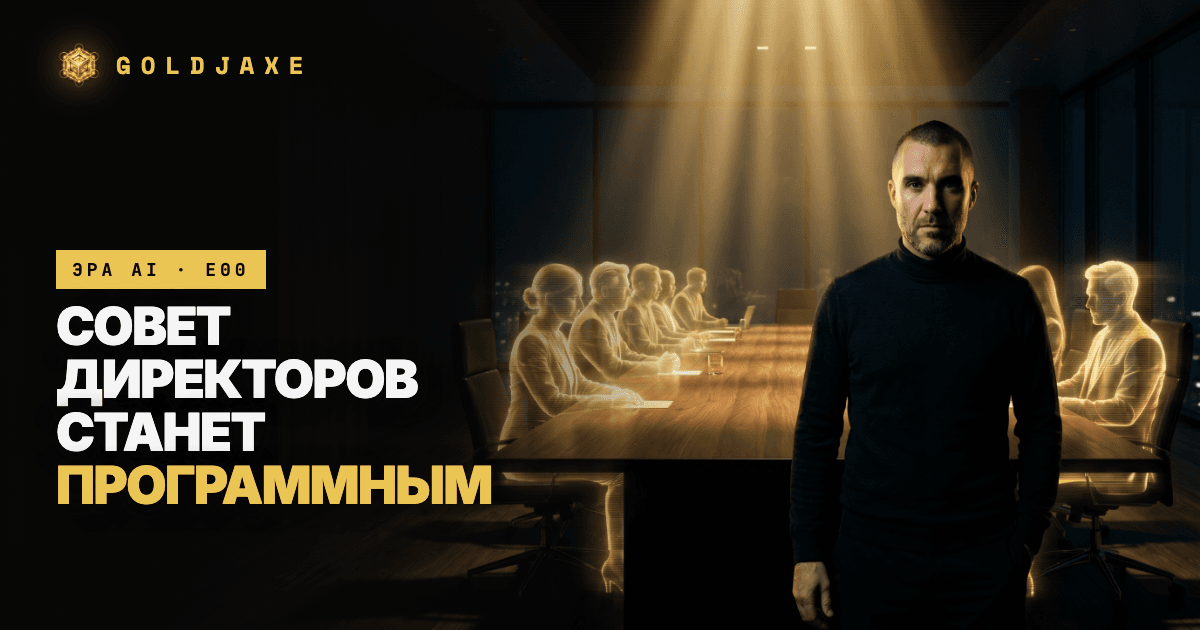
GOLDJAXE — a holding of four companies — is already run not by an army of hired executives, but by an operating system with an AI team. 213 nodes: people, money, security — on one screen. One person at the controls. Below is how it works and why it's becoming the new normal.
A hired board is the same ledger
The classic management model rests on human intermediaries. Every decision moves through a chain: an analyst gathers data, a manager compiles a report, a director signs off, the board approves. The chain is slow, expensive, and dependent on who happens to be in their seat today.
That's the «ledger» — not because it's bad, but because it's a manual layer on top of data that is already digital. The bookkeeper with a ledger did exactly this: moving by hand what a system now computes.
The bottleneck of such a structure is the owner. The larger the company, the more decisions funnel to them through intermediaries. Growth hits not the market, but the throughput of the management chain.
What «a board as software» means
It's a holding's operating system — a layer that connects data, roles, and decisions into one circuit. Not an assistant, not «we'll plug in twenty neural networks». An operating system: it has a kernel, memory, a desktop, a treasury, and a security perimeter.
The C-level roles in it are programmatic. Finance, legal, design, content, security — these aren't vacancies, they're modules with architecture and protocol. They don't take vacations, don't lose context, and run by protocol rather than by mood.
The category is AI Holding OS — an operating system for running a group of companies. GOLDJAXE builds it on itself: the holding is the first client of its own system.
Anatomy of a holding's operating system
The architecture breaks into layers. Each layer covers what departments used to do:
213 nodes is not a metaphor. These are real system elements: companies, roles, payment circuits, data routes, control points. They're connected by edges — who influences whom, where money flows, where responsibility lines run.
Four companies are managed from one point. Not because they're few, but because management is moved into the system, not spread across staff.
Not a presentation — a working circuit
The key difference from polished promises: you can see the system. Not a slide, not a mockup, but the live screen the holding is run from every day: structure, the pulse of operations over the last 24 hours, the audit trail of every transfer, treasury by branch, approvals.
That's the moat you can't fake. A presentation can be drawn in an evening. A working holding operating system cannot. It can only be built and lived in.
GOLDJAXE shows it openly, because the proof of competence is the system itself, not a story about it.
What it changes for the owner
If the business rests on you, you don't have a company — you have a job with no days off. An operating system removes the owner's role as intermediary between data and decisions.
What's freed isn't leisure time — it's throughput. One person starts running a group of companies, because the routine of decisions is moved into the system, leaving them what can't be delegated: strategy and red lines.
This is a shift not of tool, but of structure. Not «one more app», but a change in how management itself is built.
FAQ
Is this a replacement for live employees?
No. It replaces the manual management layer — the intermediaries between data and decision. The irreplaceable (strategy, red lines, relationships) stays with the human.
How is a holding OS different from a CRM or ERP?
CRM and ERP are individual nodes (clients, accounting). A holding's operating system connects all nodes into one circuit — team, memory, money, security — and adds a decision layer with an AI team.
213 nodes — does it really run, or is it a demo?
The circuit runs on the GOLDJAXE holding itself: four companies managed from one point. The public version is a depersonalized demonstration of the same architecture.
Where do I start if I want the same?
With a management-gap diagnostic — it shows which functions in your case can already move into a system. Then, by access levels into the ecosystem.
More from the blog
 The Engine Room
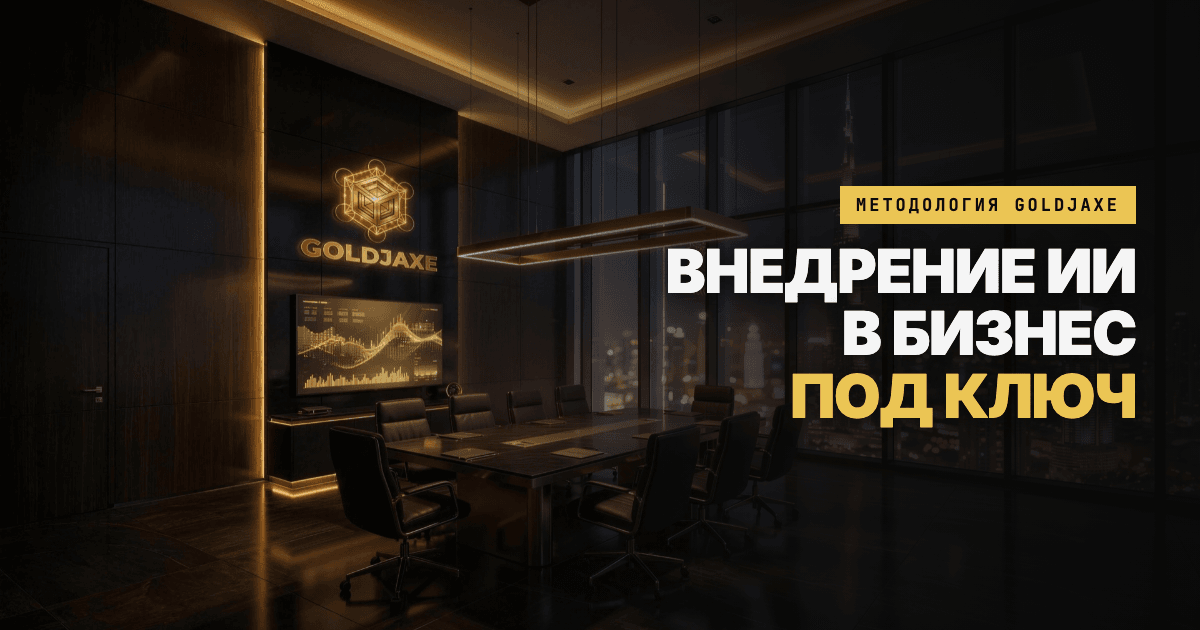
AI integration for business: the GOLDJAXE methodology — from audit to a working AI team
AI integration for business means moving specific company functions — sales, content, accounting, document flow, production control — onto AI employees with a measurable result in money and hours. The GOLDJAXE methodology does it in five stages: function audit → architecture → implementation → quality gate → knowledge capture. What sets it apart from consulting decks is proof: our own holding is run by one person and an AI team of 25+ roles, and every element of the system is open on a live showcase — a digital twin with 213 nodes, an AI-team orbit, an ERP accounting circuit. This protocol covers how turnkey AI integration works: stages, architecture principles, real cases, cost, and where to start.
 The Engine Room
Three AI signals this week: business trusted AI, AI runs the chat, AI got a passport
Three things about AI agents landed this week: seven companies in ten already run them — but forty percent of security chiefs fear losing control; Meta opened its AI agent for customer chat to everyone, at a billion conversations a day; and Estonia became the first country to give AI agents a state passport. One signal for anyone running a business: AI stopped being an assistant and became an employee — with its own risks, access to the customer, and even papers.
 The Engine Room
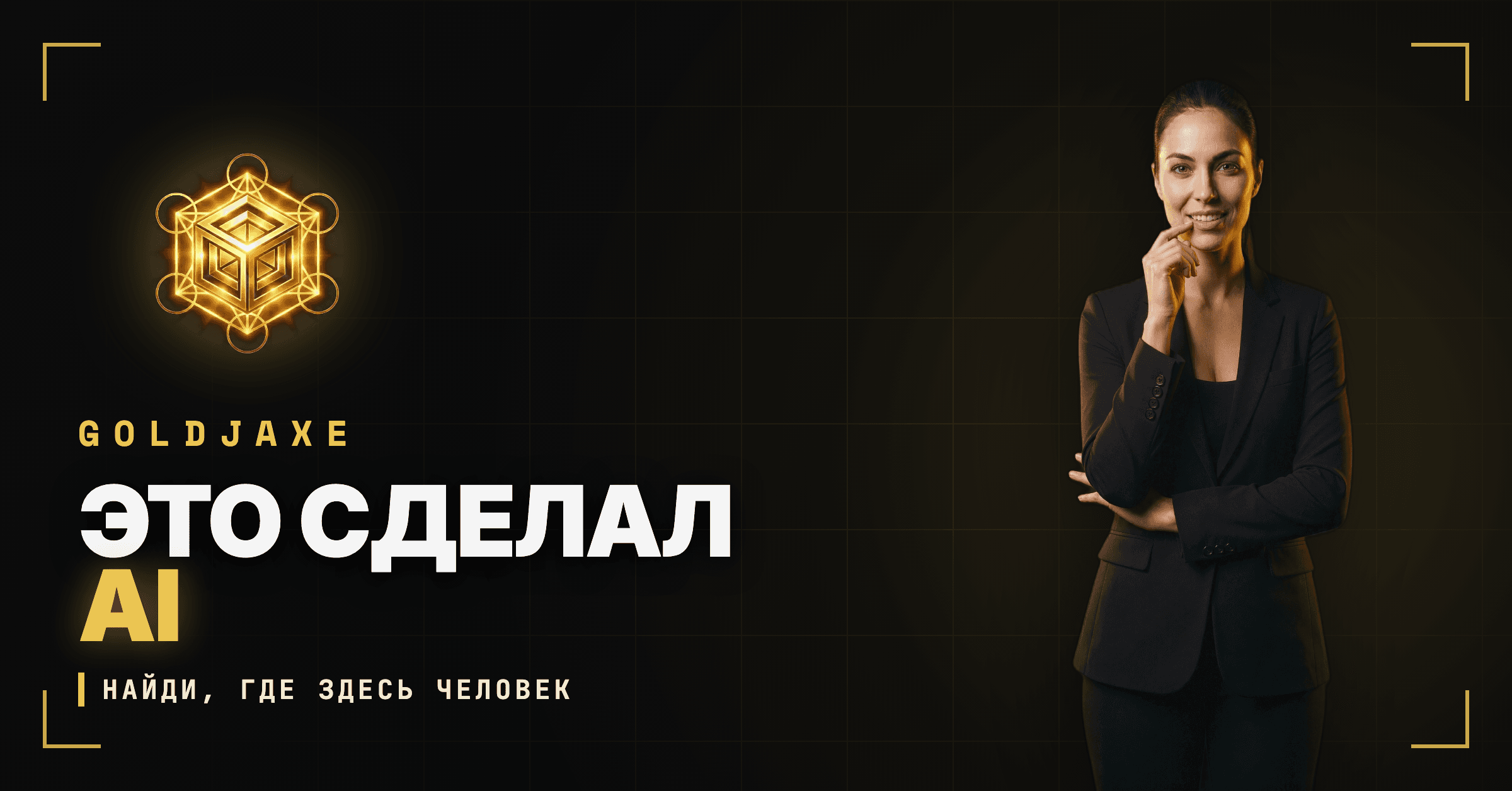
This video — and this breakdown — wasn't made by a human. An AI employee did it in eight minutes
The short video under this text was made by an AI employee named Bella — in eight minutes, with no film crew and no editor. She found the news through the holding's intelligence system, wrote the script, voiced it in her own voice, edited the video and published it to eight social platforms. Herself. This is the working content pipeline of a holding run by one person, where AI employees handle the routine. And that pipeline now costs about what a single agency post used to.